
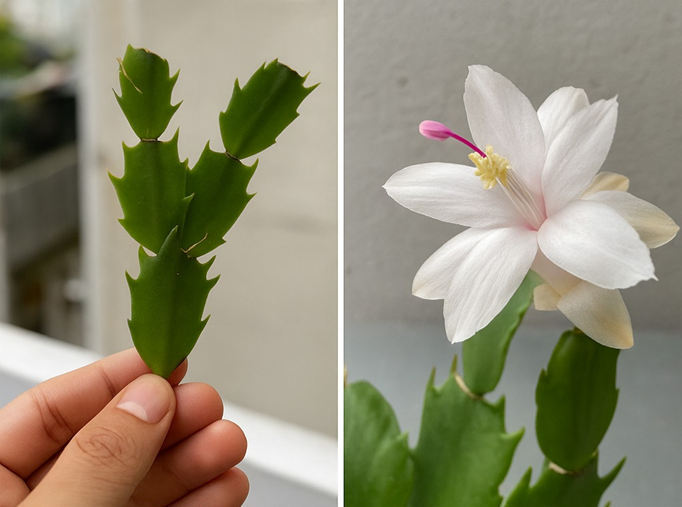
Ideal Growing Conditions
Although it’s known as a low-maintenance plant, the Christmas cactus does have a few specific needs to stay healthy and bloom beautifully:
Light: Indoors, place it near a bright window where it can receive plenty of indirect light. Avoid direct sunlight, which can burn its leaves. Outdoors, choose a cool, shaded spot protected from wind and intense sun.
Temperature: The ideal temperature range is between 20°C and 25°C (68°F to 77°F). Avoid cold drafts and sudden temperature changes, as they can cause the plant to drop its buds.
Watering: This plant needs more water than typical cacti. In autumn and winter, water once a week, allowing the soil to dry slightly between waterings. In spring and summer, increase watering to every 4–5 days. For best results, water from the bottom by placing the pot in a dish of water and letting the soil absorb moisture naturally.
Humidity: Because it comes from tropical forests, the Christmas cactus loves a bit of humidity. You can mist it lightly during dry indoor seasons.
By following these care tips, you’ll keep your plant strong and healthy throughout the year — and ready for its spectacular winter bloom.
Why It’s Called the “Christmas Cactus”
The name itself is a clue to the plant’s special charm: it blooms during the Christmas season. The flowers appear at the ends of the segmented stems, adding bursts of color just when most other plants are dormant.
For many people, the blooming of a Christmas cactus is a sign of the approaching holidays — a living decoration that brings warmth and natural beauty to the home.
However, getting it to bloom consistently every year can be tricky. This is where a little extra care — and a natural nutritional boost — makes all the difference.
How to Make Your Christmas Cactus Bloom: The Secret Ingredient
If you’ve ever struggled to make your Christmas cactus bloom, you’re not alone. Like many winter-blooming plants, it needs a bit of encouragement to produce its full display of flowers.
Among all the natural ways to stimulate blooming, there’s one ingredient that works wonders: potato starch.
This simple kitchen staple, often used in cooking and baking, can provide your Christmas cactus with the energy and nutrients it needs to flower more abundantly. It’s also completely natural, making it an excellent eco-friendly alternative to chemical fertilizers.
How to Use Potato Starch on Your Christmas Cactus
Measure the starch: Take two to three teaspoons of potato starch.
Apply it to the soil: Sprinkle the starch directly onto the soil at the base of the plant.
Cover with fresh soil: Add a thin layer of clean potting mix on top to prevent the starch from forming a crust.
Water gently: Pour a small amount of water over the area to help the starch dissolve and reach the roots.
That’s it — a simple, one-step natural boost! The starch breaks down slowly, providing a steady source of carbohydrates that support the plant’s energy needs during its flowering phase.
Why Potato Starch Works
Potato starch acts as a natural fertilizer, feeding the beneficial microorganisms in the soil and improving nutrient absorption. Here’s what makes it effective:
Energy source: The carbohydrates in the starch give the plant the extra energy it needs to produce flowers.
Health boost: It strengthens the plant’s immune system, helping it resist stress and recover from temperature changes or repotting.
Growth support: It stimulates the growth of healthy roots and new shoots, keeping the plant lush and vibrant.
Soil improvement: It enhances soil structure, promoting better moisture retention and aeration.
This treatment doesn’t just help your Christmas cactus bloom more intensely; it also contributes to its long-term health and resilience.
